.png?width=517&height=128&name=Group%20(2).png "Group (2)")
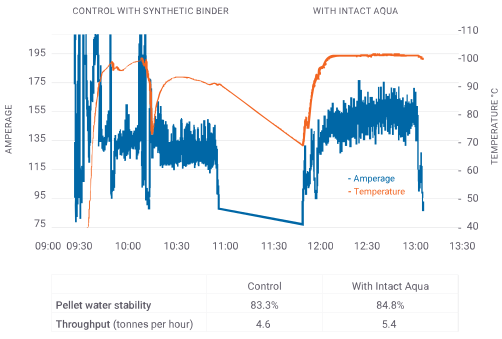
The field trial consisted of a control run using standard shrimp feed with a synthetic binder, followed by production runs using Intact Aqua. The introduction of Intact Aqua improved process stability, enabling higher production rates and increased pelleting temperatures.
Key takeaways:
- Water Stability: Pellets produced with Intact Aqua showed a 1.5% improvement in water stability compared to the control run.
- Production efficiency: The reduced amperage with Intact Aqua enabled a 17% increase in production without any blockages.
- Temperature Control: The control run required lower temperatures to avoid blockages, while Intact Aqua allowed temperatures to be raised by nearly 10 °C — improving utilisation of the natural binding properties in the raw materials.
Testing Method:
- Initial Dry Weight: Three replicate 25g samples were dried in an oven at 130°C to a constant weight.
- Water Stability Test: Three additional 25g samples of each feed were placed in separate flasks filled with seawater and shaken for 30 minutes at 200 rpm.
- Screening: After shaking, the pellets were screened by pouring the contents of each flask over a 0.85 mm sieve.
- Rinsing and Drying: The collected feed was rinsed with distilled water and dried to a constant weight at 130°C.
- Calculation: The dry weight of the recovered pellet material was divided by the initial dry weight to calculate the percentage of water stability.
.png?width=385&height=126&name=IntactAqua_uten_payoff-01%20(1).png)