PLANT NUTRITION

Enhancing nutrient use efficiency and crop performance

In intensive cropping systems, a significant share of applied nitrogen and phosphorus never reaches the crop. Fertiliser nitrogen recovery rates can fall below 50%, increasing input costs and contributing to environmental issues such as groundwater contamination and eutrophication.

Improving nutrient use efficiency (NUE) means helping crops make better use of every fertiliser application without compromising yield. Borregaard's bio-based solutions help manufacturers and formulators develop products that do exactly that.

Key challenges

  • Phosphorus fixation and nitrogen losses: applied nutrients become unavailable before they can be taken up by the plant

  • Overfertilisation with limited return: higher application rates increase costs without delivering proportional yield gains

  • Nutrient gaps at critical growth stages: reduced nutrient availability can limit crop development and overall productivity

Our products

How our solutions improve nutrient use efficiency

Our solutions improve nutrient use efficiency by enhancing nutrient access at the root level while maintaining nutrient availability in the soil. This leads to better fertiliser utilisation, more consistent crop performance and higher yields.

IMPROVED ROOT DEVELOPMENT

Promotes root growth and branching to improve nutrient access.

MORE PHOSPHORUS AVAILABILITY 

Enhances phosphorus availability and maintains nutrients in plant-accessible forms.

REDUCED NITROGEN LOSSES

Reduces losses and keeps nutrients available in the root zone.

MORE CONSISTENT YIELDS

Supports higher and more consistent yields under varying fertilisation conditions.

Trial data

Supporting nutrient uptake and root development
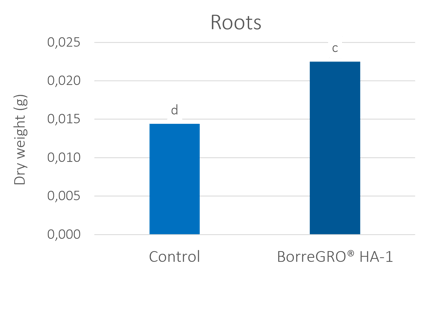
root ha-1Our BorreGRO® range of products stimulate root development and improve nutrient uptake, helping crops make better use of
applied nutrients. By promoting root growth and branching, they increase the root surface area available for nutrient absorption, helping crops access nitrogen, phosphorus and micronutrients more effectively during critical growth stages.

In controlled studies, BorreGRO® HA-1 increased root growth by 56.3%, supporting more efficient uptake of nitrogen, phosphorus and micronutrients during critical growth stages.

They also support nutrient transfer processes in the root and rhizosphere, enabling more efficient uptake and more consistent crop performance.

PROVEN RESULTS IN FIELD CONDITIONS
Improved phosphorus uptake all season long 

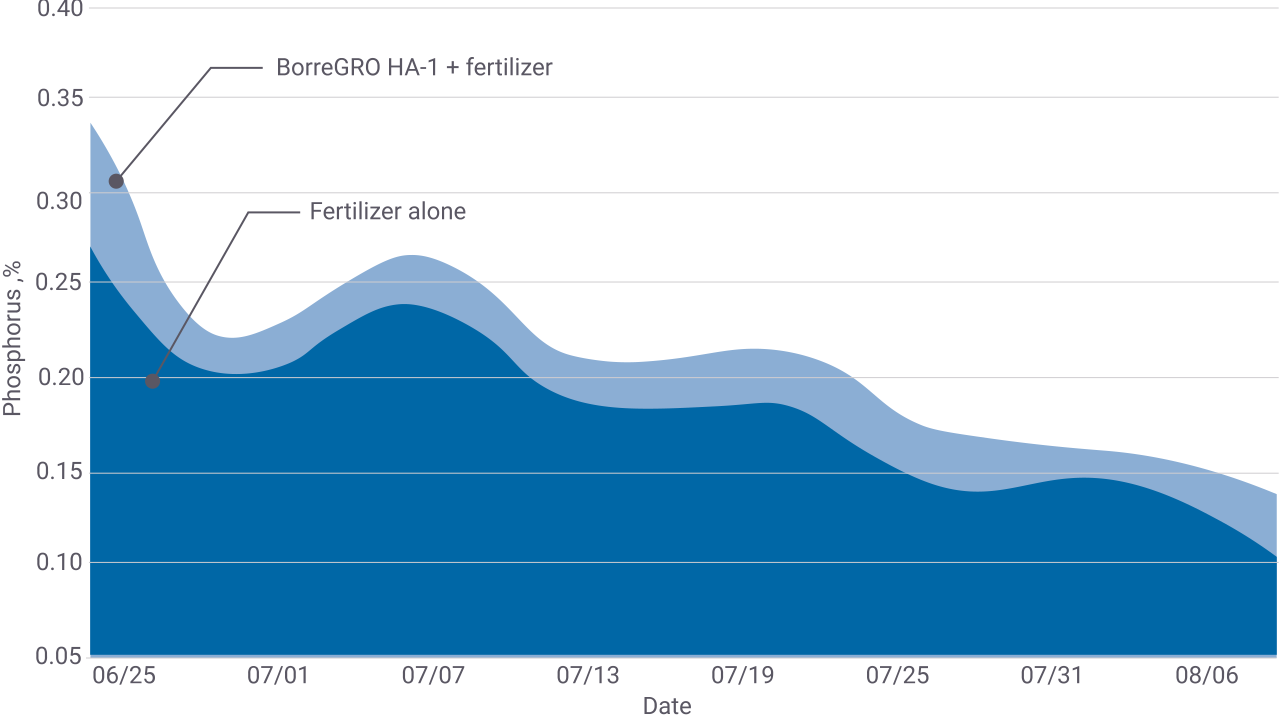
A field study in potato (Idaho, USA) demonstrated improved phosphorus uptake when our product BorreGRO HA-1 was used alongside standard fertilisation.

  • Higher phosphorus levels in plant tissue throughout the growing season.
  • Improved nutrient use efficiency compared to fertiliser alone.
  • Increased proportion of marketable yield and larger tuber size by 14%.
    borregro-ha-1-improves-potato-phosphorus-uptake

These results demonstrate how improved phosphorus availability supports more efficient nutrient uptake throughout the growing season.

Talk to our experts about improving nutrient use efficiency.

Reducing nitrogen losses

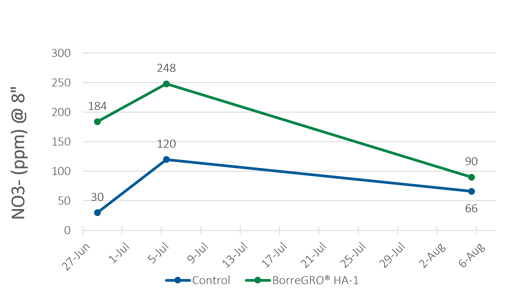
Our solutions help retain nutrients in the root zone by reducing nitrogen losses through leaching while maintaining nutrient availability throughout the growing season.
ha-1 leaching_


Field results show greater nitrate (NO₃⁻) retention compared to untreated control, helping crops access nutrients when they are needed most.


They also improve nutrient availability by reducing fixation in the soil, ensuring that applied nutrients remain available throughout the growing cycle. This supports higher and more consistent yields under both standard and reduced fertilisation conditions. By improving nutrient retention and uptake, our solutions help maximise the return on every fertiliser application while supporting more sustainable nutrient management.
Talk to us about reducing nutrient losses.

Higher and more consistent yield

By improving nutrient uptake and nutrient use efficiency, our bio-based solutions help crops make better use of applied fertilisers. The result is higher and more consistent yields across both soil and foliar fertiliser applications.

Their excellent solubility and compatibility across a wide pH range, including high-salt fertiliser formulations, allow manufacturers to incorporate our technologies into a broad range of fertiliser systems while maintaining formulation flexibility.

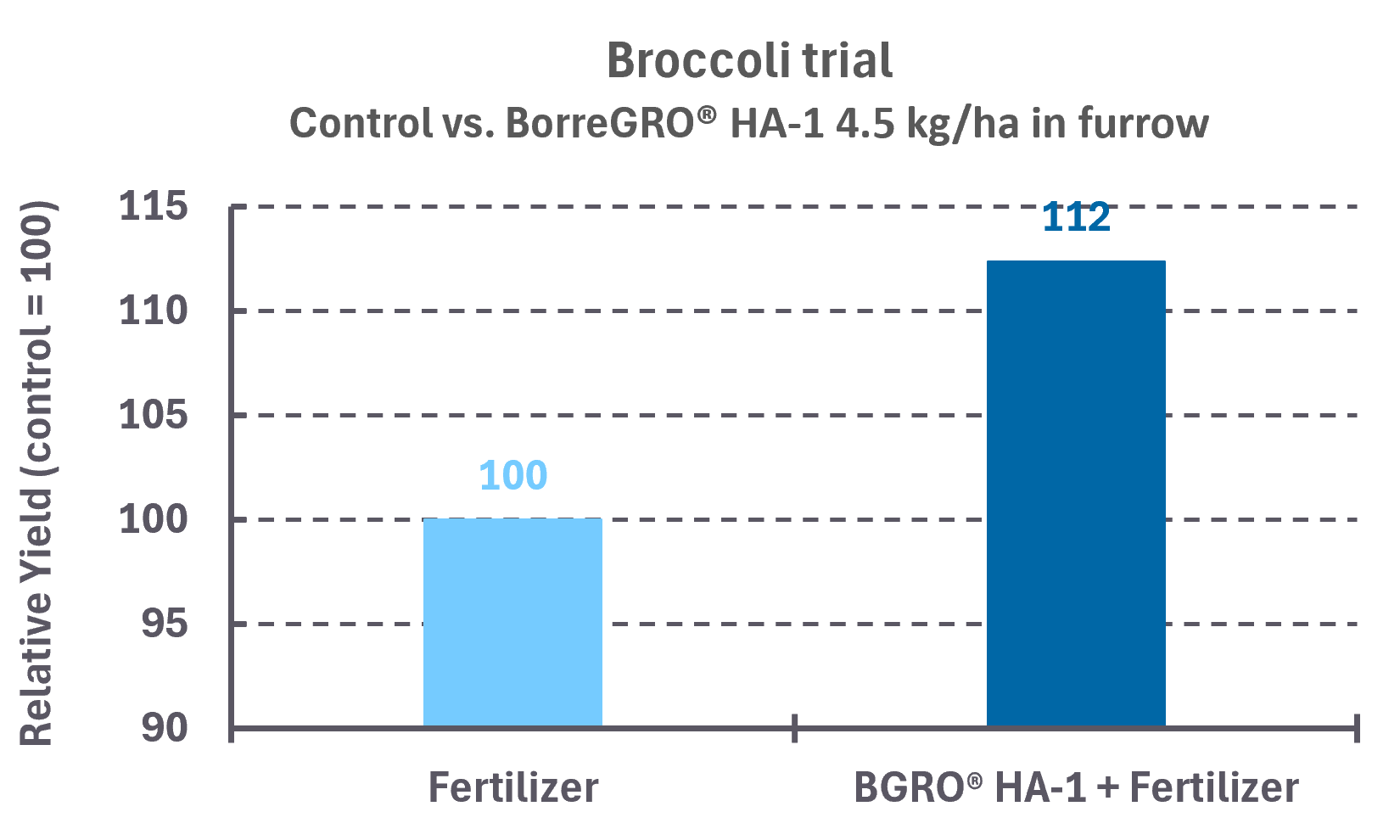
broccoli trial_ha1Applied two weeks before planting, BorreGRO® HA-1 increased broccoli yield by 12.4%
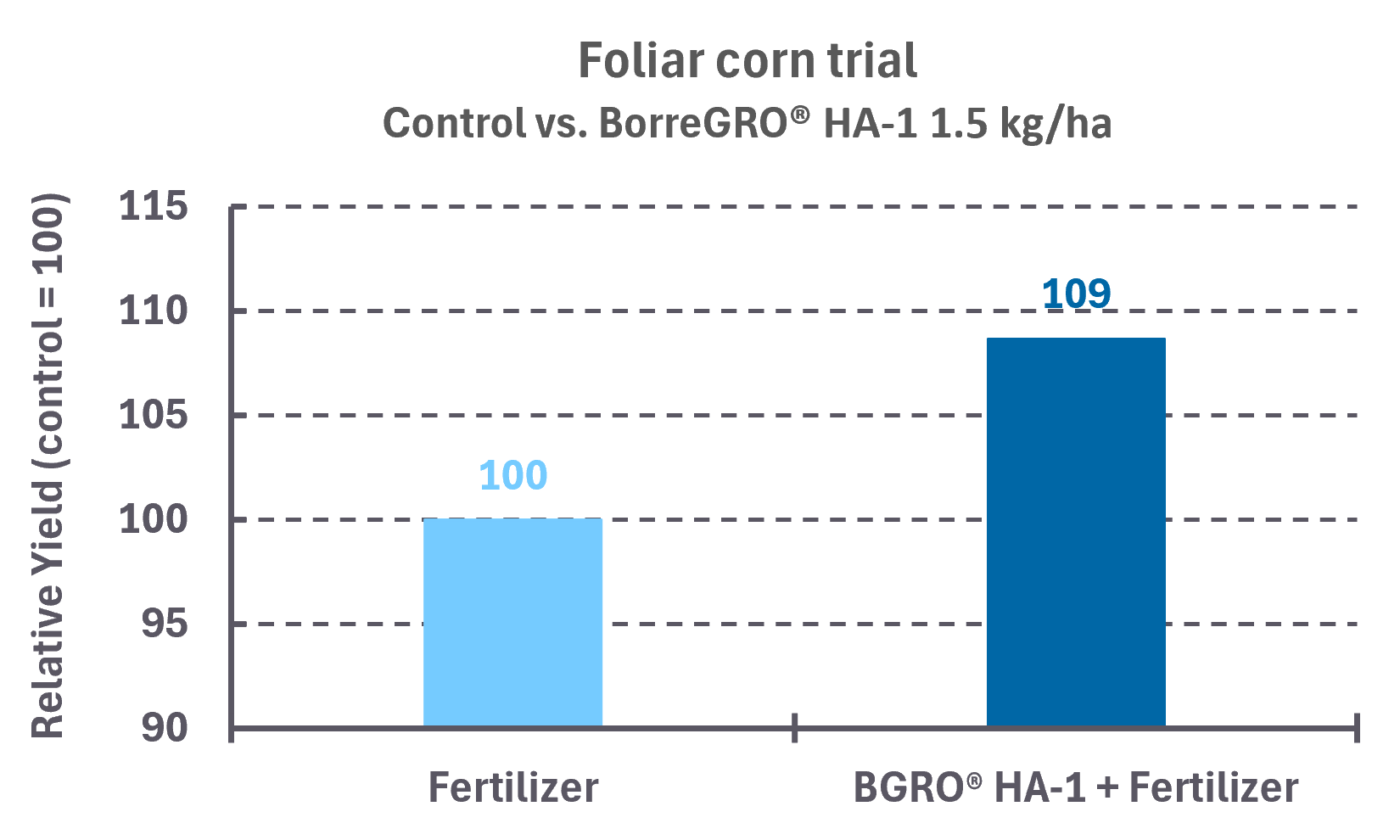
foliar corn trial_ha1Applied at the brown silk stage, BorreGRO® HA-1 increased corn yield by 8.7%

Frequently asked questions

  • How can bio-based ingredients help crops absorb applied fertilisers more efficiently?

    Bio-based ingredients can improve nutrient use efficiency through two complementary mechanisms. Humic-based biostimulants support root development, enhance nitrate uptake and reduce nutrient losses, directly improving how much of the applied nitrogen and phosphorus the plant can actually use. Lignosulfonate-based soil conditioners work alongside by complexing metal salts, stimulating beneficial microbial activity in the rhizosphere and introducing organic carbon that makes the soil environment more favourable for nutrient uptake. 

  • Can nutrient use efficiency (NUE)-enhancing ingredients be incorporated into existing liquid NPK or speciality fertilisers?

    Yes. Borregaard offers NUE ingredients specifically designed for compatibility in high-salt and low-pH fertiliser systems, the most common formulation challenges in liquid specialty blends. They integrate without destabilizing the base formulation, which lowers development risk and reduces time to market. CE-marked options are also available, allowing fertiliser manufacturers to make regulated NUE claims on their final products.

  • Is there field evidence for yield improvements using Borregaard’s NUE solutions?

    Yes. Borregaard's NUE solutions are supported by open field trial data showing consistent yield improvements across multiple crop groups. Independent third-party life cycle assessments and performance documentation are also available, confirming both agronomic efficacy and environmental benefit compared to synthetic alternatives.

Talk to our experts about improving nutrient efficiency