Vanisperse LI

Debundling: Unlock the potential of SWCNTs

Single-walled carbon nanotubes

Borregaard’s Vanisperse LI is the bio-based solution to one of the toughest challenges in battery formulation - dispersing SWCNTs effectively in water. The agglomeration and hydrophobicity of SWCNTs leads to high viscosity, sedimentation, and poor electrode performance. Developed from sustainably sourced wood, Vanisperse LI promotes the wetting, debundling, and dispersion of SWCNTs, resulting in uniform electrode compositions and optimal battery performance.

SWCNT AGGLOMERATION & SEDIMENTATION

SWCNTs are notorious for agglomerating and crashing out of a suspension. Vanisperse LI disrupts agglomerate formation through steric and electrostatic stabilization. Hydrophobic regions adsorb to the SWCNTs, while hydrophilic groups draw the SWCNT into the water and stabilize the particle. By decreasing the particle size, the slurry stability increases exponentially per Stoke’s Law.
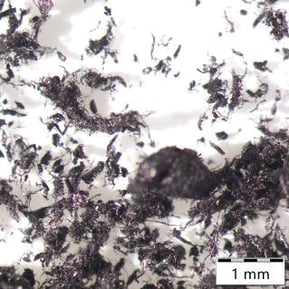
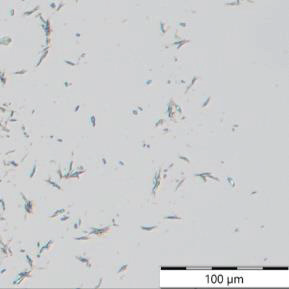
Bundles of SWCNTs                                             Separated SWCNTs
without Vanisperse LI                                          with Vanisperse LI

HIGH VISCOSITY SLURRIES

Vanisperse LI helps control slurry viscosity, improving processibility. SWCNT slurry viscosity follows a nonlinear trend, rising initially and then dropping as dispersion improves. Optimal dispersion occurs near 1.5 mg of Vanisperse LI per m² SWCNT surface area in the slurry.
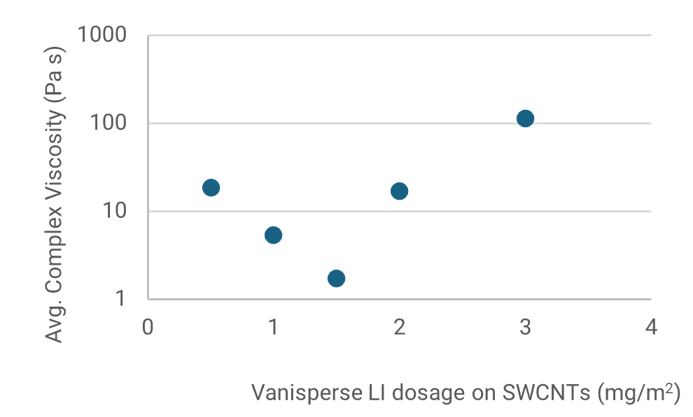
dispersion of nanotubes

INCONSISTENT COATINGS

Particle jamming is a phenomenon where high-solids suspensions transition to solid-like state under applied force, like flowing through a slot-die coater. The viscosity increases dramatically, causing variation in electrode thickness and line defects. Vanisperse LI disrupts SWCNT bundles, decreasing their particle size and preventing reagglomeration. This reduces the likelihood of particle jamming, preventing scrap and downtime.

Read our Publication: "Debundling of SWCNTs using a Non-Toxic, Low Carbon Footprint Dispersant"

Abstract

A fully aqueous, N-methyl-2-pyrrolidone–free strategy for debundling single-walled carbon nanotubes (SWCNTs) is reported using the renewable dispersant Vanisperse® LI. Dispersions at 2 mg mL−1 were subjected to probe ultrasonication at 0.3 W mL−1 and evaluated using oscillatory rheology. Complex viscosity (η*) exhibited a transient maximum (~75 min) consistent with the formation of a percolated fibrous network, followed by a decline as debundling progressed. An optimum dispersant coverage of ~1.5 mg m−2 minimized η*, while overdosing likely induced multilayer adsorption and bridging seen by a rapid increase in η*. A two-stage centrifugation at 10,000× g yielded storage-stable suspensions of debundled SWCNTs without ultracentrifugation. SEM confirmed substantial debundling into thin fiber-like bundles. By formulating a dispersion with a dispersant that has a significantly lower cradle-to-gate carbon footprint than both fossil-based and bio-based alternatives such as CMC, this work presents a more sustainable approach to producing debundled SWCNT dispersions for advanced material applications.

Click here to read the full article.

vanisperseli

Technical Bulletin: Dispersion of Carbon Nanotubes with Vanisperse LI 

Borregaard’s bio-based battery additives are designed for use in water-based electrode slurries and to stabilize aqueous carbon nanotube (CNT) dispersions. Obtained from sustainably sourced wood, our products are non-toxic, environmentally friendly, and highly effective.

Vanisperse LI provides a uniquely sustainable alternative and affords a lower CO2 footprint than petroleum-derived additives. Efficient dispersion of CNTs is critical for achieving uniform electrode composition and optimal battery performance. Sustainable water-soluble dispersants are essential to de-agglomerate CNTs in water, preventing the hydrophobic carbons from reforming agglomerates. 


Contact us about Vanisperse LI