.png?width=517&height=128&name=Group%20(2).png "Group (2)")
For decades, the homecare industry has trained consumers to believe that colour signals performance. Blue means powerful. Green means eco-friendly. Bright, vivid formulations have become shortcuts for trust on crowded shelves.
The problem? Colour has never cleaned anything.
What started as a branding tool has quietly become a misconception, one that no longer fits today’s reality. As regulatory scrutiny increases and sustainability claims must be scientifically proven and independently verified, every ingredient in a formulation is being questioned. And that includes dyes.
So, the real question is no longer “what colour should a product be?”
It is: “why does it need colour in the first place?”
Colour is often mistaken for performance. In this article, we will explore why naturally coloured - often brown - formulations are emerging. Similar shifts have already taken place in industries such as packaging, where unbleached and recycled materials have redefined brown as a marker for sustainability rather than compromise. In this context, moving toward more natural colours is not just a design choice, but a step toward more credible, transparent, and future-proof products.
Brand continuity and formulator dilemma
For decades, colour served as both a visual cue and a tool for brand continuity. Familiar shades built recognition and trust, reinforcing the belief that visual consistency equals credibility. As a result, changing colour was therefore considered a risk, one that could confuse customers or weaken brand identity.
For formulators, this created a dilemma. Although colourants add no functional value, the fear of disrupting consumer expectations has limited the introduction of new formulations and kept dyes in products that do not need them. Yet, as sustainability expectations rise, credibility is shifting from visual consistency to transparency: what a product contains and why each ingredient is there, now matters more than marketing.
Why colour does not equal performance
Most consumers assume that a blue detergent cleans better, or a green dishwasher tab is more eco-friendly. These associations stem from decades of brand positioning, not chemistry.
In traditional formulations:
- Colourants are added for aesthetics and brand identity, not cleaning performance.
- Dyes do not improve efficacy, stain removal, or hygiene.
- Colours help differentiate different product variants, such as “fresh scent” vs. “sensitive,” even when the cleaning performance is identical.
As regulatory scrutiny increases and product data becomes digitally accessible, every non‑functional ingredient shifts from a design choice to a question mark. The EU Empowering Consumers Directive (Directive 2024/825), applicable from September 2026, requires that environmental claims are scientifically substantiated — making visual cues like green dyes a potential greenwashing liability. Meanwhile, the new EU Detergents Regulation (EU 2026/405) introduces the Digital Product Passport, requiring a full list of intentionally added substances accessible via a digital identifier, making every non-functional additive visible and open to scrutiny.
Sustainability assessments now operate at ingredient level, where each component is evaluated for its environmental footprint across its life cycle. Even non-hazardous ingredients contribute to resource use, emissions and downstream environmental impact. When they do not contribute to product performance, they become difficult to justify. The EU Ecolabel criteria for detergents already subject colouring agents to the same assessment requirements as other ingoing substances, regardless of concentration. Dyes added solely for visual appeal therefore stand out as one of the least defensible formulation choices.
When dyes are removed – natural colour and the perception gap
As the industry evolves toward greener standards, more brands are reassessing what truly needs to be in their products. Removing dyes is one of the simplest steps toward more responsible formulations.
When colorants are removed and ingredients remain less processed:
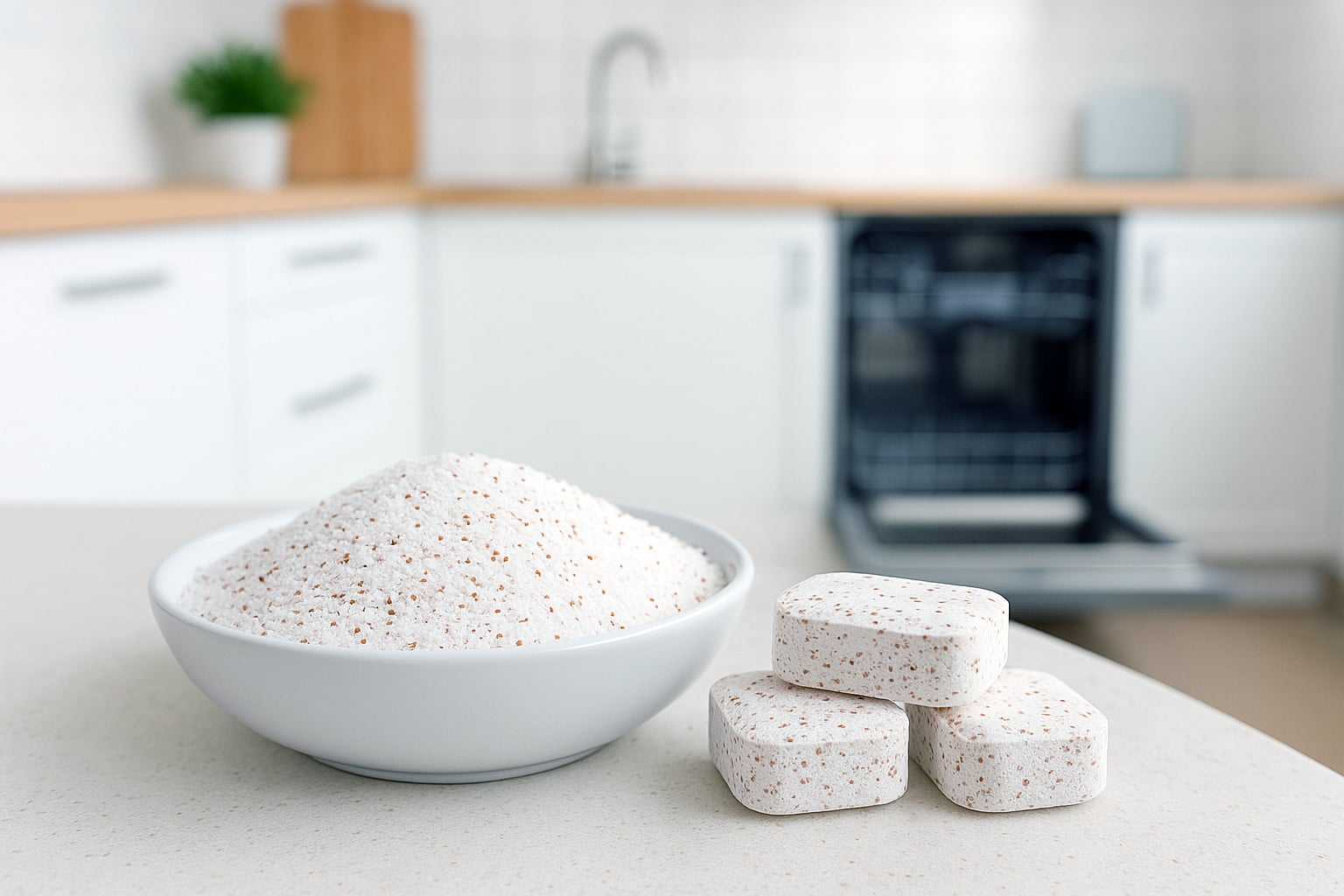
- Natural shades appear - often beige, tan, or brown.
- These colours reflect plant‑based ingredients, minerals, or naturally derived ingredients closer to their original state
These neutral tones differ from the brightly coloured convention long seen on shelves. But in reality, natural colour is often evidence of fewer additives, not weaker performance.
The real barrier is perception. Consumers have been conditioned to associate bright colours with effectiveness, making unfamiliar natural shades appear less powerful. But colour is not a performance indicator – cleaning comes from surfactants, enzymes, and builders, not dyes. If colour were removed from cleaning products tomorrow, performance would not change. If functional ingredients were removed, cleaning would stop entirely.
As consumers increasingly ask, “What’s in my product - and why is it there?”, removing colourant enables clearer communication: fewer unnecessary additives, simpler ingredient list and a more honest reflection of raw material origin. In this context, natural colour becomes a signal of transparency.
The question is not whether consumers will accept brown products. It is whether regulators, retailers, and informed consumers will continue accepting unnecessary ones.
Changing expectations around colour
To shift customer perception, the industry should embrace a new narrative:
- Colour doesn’t clean - chemistry does.
- Natural colour signals sustainability, not weakness. Performance should be proven, not implied visually.
This shift is already happening. In fact, Kiilto, a producer of powder laundry detergents, states that “the brown colour clearly prove the ingredients origin and also shows the consumer the evenly spread amount of it. We deliberately did not want to mask the colour from our product”.
At Borregaard, we see this shift reflected in the growing interest in lignin-based ingredients for homecare formulations. Beyond their functional benefits, lignin-based materials with their natural brown colour support formulations designed around performance, transparency and reduce reliance on artificial colouring.
A More Transparent Future for Cleaning Products
The future of homecare will not be shaped by what looks clean, but by what is proven to be.
As regulation tightens and transparency becomes the norm, every non-functional ingredient becomes harder to defend.
Colour is no exception.
Natural shades - including brown - are not a compromise. They are a signal of fewer unnecessary additives, more transparent formulations, and a shift toward performance over perception. This is not just about removing dyes alone, but about redefining what quality looks like in a market where trust is built on evidence.
Brands now face a choice: continue formulating for perception or start formulating for proof. Natural colour is not the goal. It is the consequence of removing what never mattered.
Ready to rethink colour in your formulations?
Borregaard's lignin-based biopolymers deliver functional performance in homecare formulations with naturally occurring colour profiles, no dyes needed, no performance compromised.
Talk to our team about how bio-based ingredients can support your reformulation journey.