.png?width=517&height=128&name=Group%20(2).png "Group (2)")
For decades, formulators have accepted one of the fundamental trade-offs in water-based coatings:
-
If you extend the open time, drying becomes slower.
-
If you accelerate drying, you reduce the time available for application.
It is a compromise that influences everything from decorative paints and wood coatings to waterproofing systems and high-build protective coatings. As sustainability requirements increase and VOC limits become stricter, finding the right balance has become even more challenging.
But what if this trade-off is not as fundamental as we have assumed?
Why longer open time usually means slower drying
When a water-based coating is applied, drying begins immediately. Water evaporates from the surface while additional water is transported from within the coating through tiny capillary pathways.
Over time, the binder particles begin to pack together. Eventually, a skin starts forming at the surface.
Once that happens, the transport of water slows significantly. Although moisture remains inside the coating, it has a harder time reaching the surface where it can evaporate.
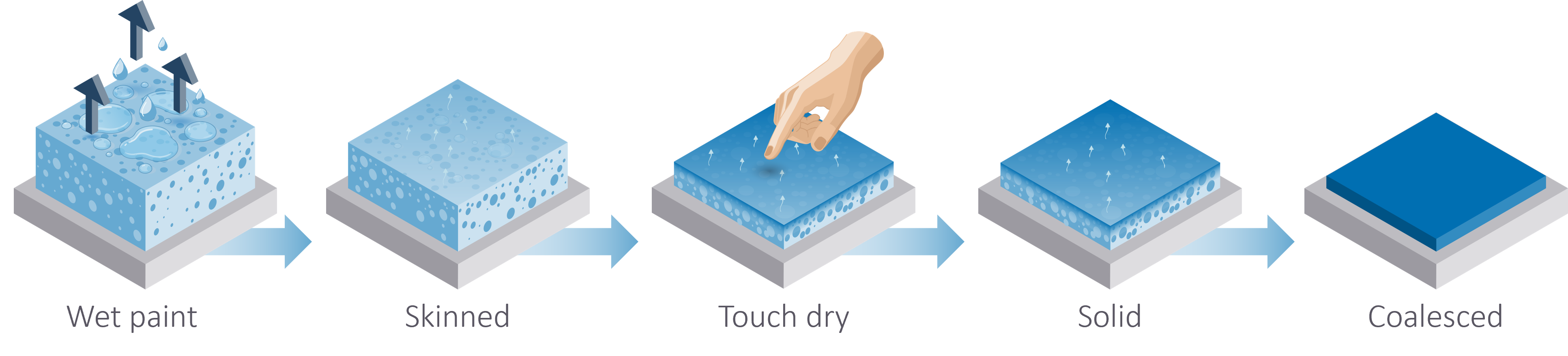
Figure 1: Drying process showing water transport, skin formation and reduced evaporation.
This is why many traditional approaches to extending open time also slow the overall drying process. The mechanisms that delay film formation often delay the entire drying sequence.
The result is a familiar compromise that formulators have learned to work around rather than question.
Perhaps we have been solving the wrong problem
When discussions turn to faster drying, the natural instinct is to ask:
"How can we make water evaporate faster?"
An equally important question may be:
"How can we keep water moving to the surface for longer?"
This shifts the focus from evaporation itself to what happens inside the coating during the early stages of drying.
If the pathways that transport water remain open for longer before the surface closes, water can continue moving freely to the surface. In other words, the coating can remain workable while still allowing efficient drying.
It is a subtle distinction, but one that changes the way we think about the relationship between open time and drying speed.
A different way of approaching film formation
Recent developments in rheology and bio-based materials have introduced new ways to influence the early stages of film formation.
Instead of relying solely on slowing evaporation or delaying drying, it is possible to influence how the coating structure develops as water leaves the film.
One example is microfibrillated cellulose, where an interconnected fibril network helps maintain open capillary pathways during the initial drying stage. Rather than allowing the surface to close prematurely, the network supports continued water transport towards the surface.
The interesting consequence is that two properties traditionally considered opposites can begin to work together.
Longer open time no longer has to come at the expense of drying speed.
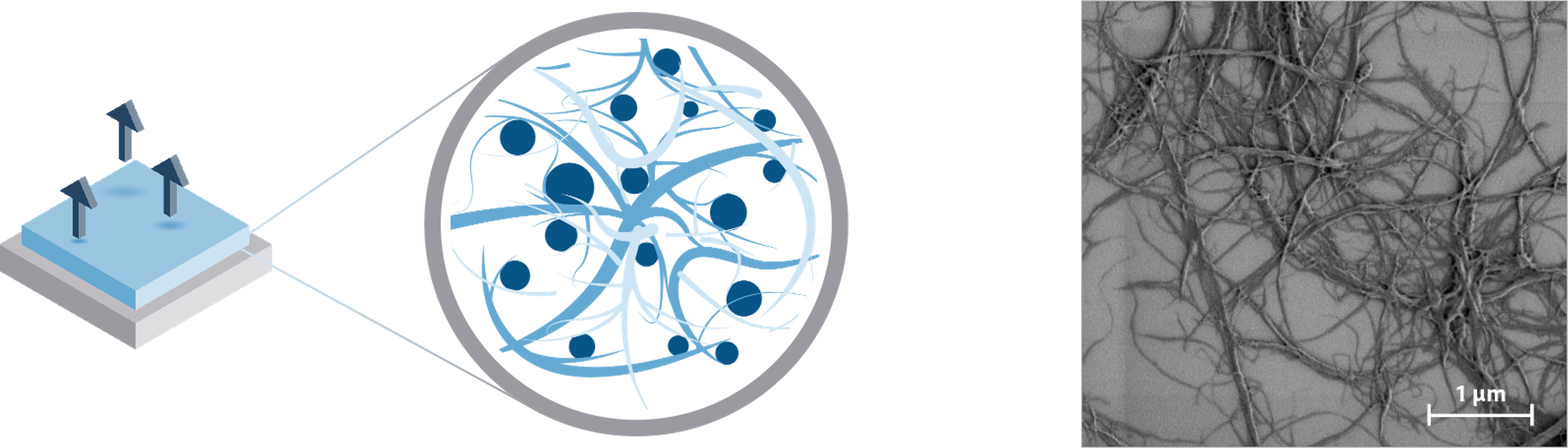
Figure 2: Open capillaries allowing continued water transport versus premature surface skinning.
Why this matters beyond the laboratory
For formulators, this is more than an interesting scientific observation. Improved control of the early drying process can translate into practical advantages throughout the coating's life cycle.
A longer open time provides applicators with more flexibility and reduces the risk of visible lap marks. At the same time, maintaining efficient water transport can shorten drying times, particularly in thicker films where moisture otherwise becomes trapped beneath a surface skin. The effects often extend beyond application itself.
Keeping the coating structure open during drying can help reduce internal drying stresses, lowering the risk of mud cracking in high-build coatings. Faster water removal also contributes to earlier rain resistance, allowing exterior coatings to withstand unexpected weather sooner after application.
Rather than treating these as separate performance benefits, they can be viewed as different outcomes of the same underlying drying mechanism.
"The question is no longer how to slow drying down.
It is how to keep water moving through the coating for longer."
Rethinking established assumptions
Innovation in coatings does not always come from introducing entirely new performance targets. Sometimes it comes from questioning assumptions that have guided formulation decisions for years. The relationship between open time and drying speed is one such example.
By understanding what happens inside the coating during the earliest stages of drying, formulators have new opportunities to optimise application properties without accepting the traditional compromises.
As material technologies continue to evolve, it may be time to rethink whether longer open time and faster drying truly need to be opposing objectives.
Continue exploring
If you would like to explore the drying mechanism in more detail, watch our on-demand webinar, where our coatings specialists explain the science behind longer open time and faster drying in water-based coatings, supported by practical formulation examples and application testing.
You can also learn more about Exilva® Open-Time Extender, a bio-based solution developed to extend workability while supporting efficient drying in a wide range of water-based coating systems.