Is Repeated Watering Still the Best Way to Control Dust on Unpaved Roads?

Water remains the most common dust suppression method on unpaved roads across many parts of Europe. The approach is simple: apply water, suppress dust, and repeat when the road dries.

Site operators and road managers have relied on this method for decades on quarry roads, construction sites, industrial facilities, forestry roads, municipal gravel roads, mining haul roads, and other unpaved surfaces.

Water works. The more important question is whether repeated watering still represents the most effective and efficient way to control dust. Recent summers across Europe have highlighted this challenge. Even regions traditionally associated with regular rainfall have experienced longer periods of dry weather, increasing dust levels and placing greater demands on dust control operations.

As road operators look for ways to improve road performance, reduce resource consumption, and lower operating costs, many are beginning to rethink their dependence on repeated watering.

Dust affects more than visibility

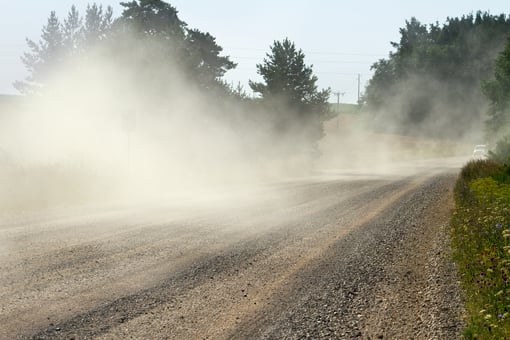
Most road operators recognise dust as a visibility issue. In reality, dust affects almost every aspect of road operations.

Dust clouds reduce visibility for drivers and machine operators, increasing safety risks. Airborne particles contribute to equipment wear and place additional strain on filters, engines, and moving components. Dust also accelerates road deterioration, resulting in higher maintenance requirements and increased operating costs.

Beyond the site itself, dust can affect neighbouring communities, create environmental concerns, and increase pressure from regulators and stakeholders.

Effective dust control is therefore not simply about reducing nuisance dust. It supports safer, more efficient and more sustainable operations.
AdobeStock_172451526

The hidden cost of repeated watering

Water can suppress dust effectively in the short term. However, the effect disappears as soon as the surface dries.

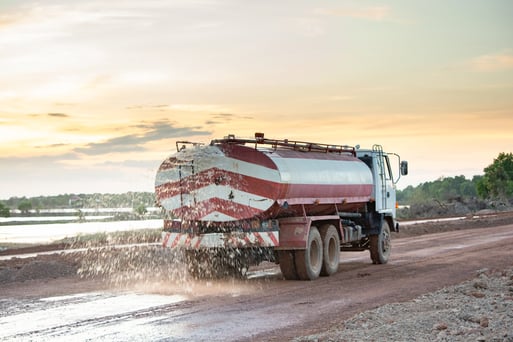
When traffic volumes are high and weather conditions are warm and dry, road operators often need to reapply water several times throughout the day to maintain acceptable dust levels. This approach consumes far more than water.

Repeated watering requires:
    • Water trucks and support equipment
    • Fuel
    • Equipment operators
    • Equipment maintenance
    • Refilling time
    • Ongoing management and supervision

Many organisations focus on the cost of water itself. However, the true cost of dust suppression often lies in the resources required to keep watering roads day after day. Reducing unnecessary water use can also support broader sustainability objectives. The challenge becomes even greater during prolonged dry periods, when roads dry faster and watering frequency increases.

The question is not whether water can suppress dust. The question is how much time, fuel, equipment and labour road operators must invest to keep doing it.
AdobeStock_250315143

Rainfall does not eliminate the dust challenge

A common assumption is that regions with regular rainfall do not need alternatives to water-based dust suppression.

However, dust problems rarely occur when it is raining. They occur when the rain stops.

Road surfaces dry out. Traffic breaks down the road surface. Fine particles accumulate. Dust returns. Rainfall may temporarily suppress dust, but it does not prevent surface fines from becoming airborne once dry conditions return.

This distinction matters because many European site operators and road managers continue to face the same challenge each summer: maintaining dust control during extended dry periods without continuously increasing watering activities.

Rather than focusing on annual rainfall totals, road operators increasingly focus on what happens between rainfall events.

From wetting the surface to binding the surface

Traditional watering and lignosulfonate-based dust suppression address the problem in different ways.

Water temporarily wets the road surface.

Lignosulfonates are bio-based binders derived from lignin, the natural binding component found in wood. They work by binding fine particles together rather than simply wetting the surface.

By creating a more cohesive and durable surface layer, lignosulfonates help prevent dust from becoming airborne in the first place.

This approach changes the goal from repeatedly suppressing dust to actively preventing dust generation.

As a result, road operators often achieve:

    • Reduced dust generation
    • Fewer applications compared with water alone
    • Lower water consumption
    • Improved road stability
    • Reduced loss of valuable road material
    • Lower maintenance requirements

Instead of relying solely on moisture to control dust, road operators create a more robust road surface capable of performing under demanding conditions.

Looking beyond water

For generations, water has served as the default solution for dust suppression on unpaved roads. That is unlikely to change overnight. However, more road operators now recognise that dust control involves far more than simply keeping a road surface wet.

Road performance, maintenance costs, equipment utilisation, water consumption and sustainability objectives all play an increasingly important role in how organisations evaluate dust suppression strategies.

As dry periods become more frequent and road operators seek greater efficiency from their road networks, many are asking a new question:

'Can we achieve effective dust control with less water?'

For a growing number of organisations, ø
ignosulfonate-based binders provide an alternative to repeated watering. Rather than simply wetting the road surface, they bind fine particles together to create a more cohesive and durable surface.

Dustex® is Borregaard's lignosulfonate-based binder for dust control and road stabilisation. By reducing dependence on repeated watering, improving road performance and lowering resource consumption, Dustex offers a more sustainable approach to dust control on unpaved roads.

Reduce dust with less water

Explore Dustex for dust control

Learn how Dustex® helps road operators improve dust control and road performance on unpaved roads around the world.

Contact us to learn more or request a sample for testing